Vintage Diving Helmet with Coral Sticker
First Impressions: A Nautical Whisper, Not a Shout
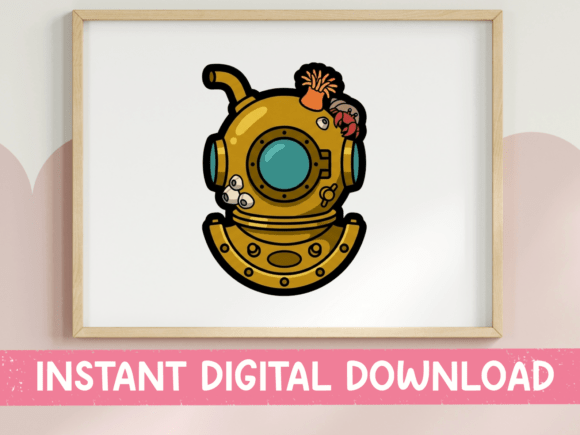
When I opened the Vintage Diving Helmet with Coral Sticker, what struck me wasn’t flash—it was quiet confidence. That round, antique deep-sea diving helmet in aged gold and brass tones feels like something pulled from a seaside antique shop, not a clip-art library. The teal porthole window is the subtle anchor—cool, clear, and just saturated enough to hold its own without overwhelming. It’s not overly detailed, but it doesn’t need to be: the shape is strong, the silhouette instantly readable, and the coral accent adds organic softness against the rigid metal form. As a machine embroidery design, it leans into charm over complexity—and that’s exactly why it works so well for real-world projects.
Where It Lives Best: Tote Bags, Sweatshirts, and Thoughtful Gifts
I tested Vintage Diving Helmet with Coral Sticker on a heavyweight natural cotton tote—no lining, no stretch, just sturdy, breathable fabric. Stitched at ~3.8" wide with medium-density fill and satin-stitched edges, it held crisp definition without puckering. The curved helmet contour translated beautifully; no distortion, no thread nesting. That’s rare for a circular design with gentle curves. I also ran it on a midweight French terry sweatshirt—same result. The design breathes. It doesn’t fight the fabric; it settles in.
This isn’t a design for tiny baby onesies (more on that shortly), but it shines on relaxed-fit crewnecks, canvas aprons for coastal cafés, linen pillow covers for beach house rentals, and even tea towels meant for gifting. I used it as a centerpiece on a custom embroidered kitchen towel for a marine biologist’s baby shower—guests kept commenting on how “timeless” it felt. That’s the quiet power of Vintage Diving Helmet with Coral Sticker: it reads as handmade, intentional, and quietly meaningful—not trendy, not disposable.
What Holds It Back (and Where to Pause)
Let’s be direct: this isn’t a one-size-fits-all embroidery file. Its round shape and moderate detail demand thoughtful placement. On caps or curved surfaces like baseball hats? Proceed carefully. The curvature can stretch the porthole window or compress the coral if you don’t adjust hooping tension and use cutaway + tear-away stabilizer combo. On thin or lightweight fabrics—think rayon challis or delicate baby jersey—the fill stitch density (as implied by its visual weight) may cause show-through or stiffness. Test first. Always.
Dark fabrics? The aged gold/brass tones will read best in warm metallic or olive-green threads—not silver or cool grey. And while the coral is charming, its small scale means it won’t resolve cleanly below ~2.5". So skip it for 2" hoop embroidery on infant hats or tiny pocket patches. Likewise, avoid layering it directly over seams, textured knits, or heavily brushed fleece unless you’ve pre-tested stabilizer layers. This is a Graphics-class design—not an applique design—so it relies on clean stitch execution, not fabric backing.
Why It Builds Trust—Not Just Decoration
As an Etsy seller and small shop product developer, I pay attention to what makes customers pause, click, and remember. Vintage Diving Helmet with Coral Sticker does that. It signals care—not just in stitching, but in curation. When used on a personalized gift (say, a monogrammed sweatshirt with this emblem above the left chest), it elevates the whole piece. It says, “This wasn’t rushed. This was chosen.” That perception translates directly to perceived value, repeat orders, and word-of-mouth referrals. For boutique branding or coastal-themed merchandise, it functions as quiet signature—not logo, not slogan, but a tactile nod to heritage and wonder.
Practical Notes Every Embroidery Designer Should Run Through
- Always test on scrap fabric first—especially with your exact thread brand and stabilizer combo. Metallic threads behave differently than polyester on this design.
- Check thread color contrast before stitching dark garments. Aged gold thread on navy reads rich; on black, it can fade. Try a warm bronze or antique brass alternative.
- Review stitch density visually in your embroidery software. If the coral looks too sparse or the helmet too heavy, adjust underlay or reduce fill percentage slightly—don’t assume the file is optimized for your machine.
- Confirm hoop size compatibility. While it scales well, avoid shrinking below 3" without checking corner resolution and satin-stitch integrity.
- Inspect small details in black-and-white mockups—does the porthole window still read as distinct from the helmet rim? Does the coral retain shape?
- Use proper stabilizer: medium-weight cutaway for stable wovens, cutaway + tear-away for knits. Skip basic tear-away alone—it won’t support the balanced weight of this design.
- Verify licensing before selling finished products or bundling the digital embroidery file. Since it’s listed under T-Shirt Designs, confirm whether commercial use is permitted for physical goods, digital resale, or both.
A Design That Earns Its Place
Vintage Diving Helmet with Coral Sticker won’t dominate a collection—but it’ll anchor one. It’s the kind of embroidery file I reach for when I want warmth without whimsy, nautical without cliché, and craft without clutter. It works because it respects the process: it doesn’t ask for perfection, just intention. Whether you’re stitching custom apparel for a local dive shop, building a cohesive line of handmade nursery decor, or curating digital design assets for fellow makers, this one earns its spot—not with volume, but with voice.