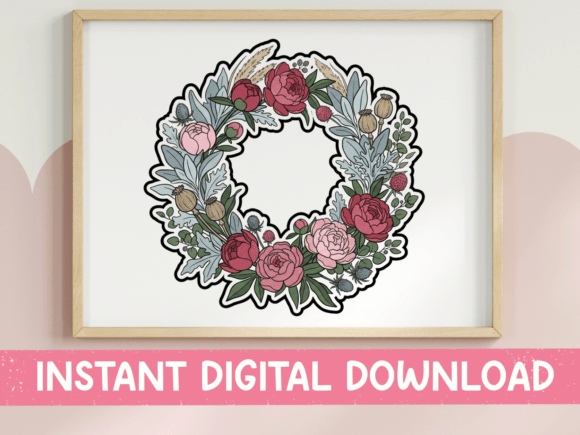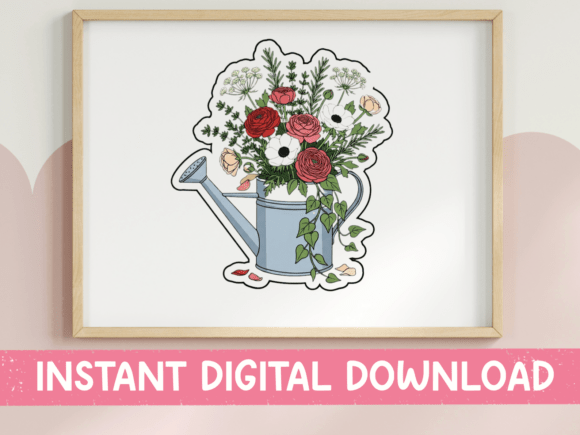
Floral Wooden Spoon Sticker Design
A Baker’s Whimsy—That Actually Embroiders Well
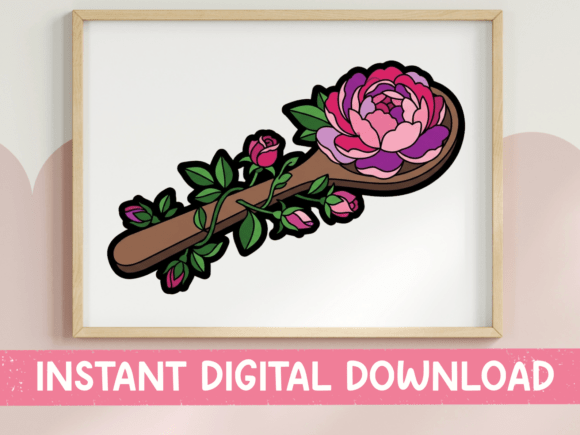
Let’s be real: I opened Floral Wooden Spoon Sticker Design expecting charm—and got it—but what surprised me was how thoughtfully it translates to thread. As someone who’s stitched hundreds of custom kitchen-themed pieces—from aprons for local bakeries to tea towel sets for wedding favors—I immediately pictured this on a heavyweight cotton tote, the spoon centered just below the strap seam, vines trailing softly toward the bottom hem. The dark-stained wooden spoon isn’t just a prop; it’s an anchor. And those deep-toned peonies? They don’t shout—they bloom with quiet confidence.
First Impressions: Mood, Shape, and Stitch-Ready Structure
This isn’t a fussy floral—it’s grounded. The spoon’s vertical orientation gives strong directional flow, making it ideal for narrow applications like cap fronts or sleeve accents. The climbing vines wrap organically, not rigidly, so they’ll adapt well to curved surfaces (think rolled cuffs or pillow covers) without distorting. There’s no tiny lettering or micro-detailing to vanish in satin stitch—just clean outlines, generous petal shapes, and intentional negative space between stems. That breathing room is golden when working with fill stitch on textured fabrics like terry cloth or linen-blend tea towels.
Where It Shines (and Where It Asks for Thought)
Floral Wooden Spoon Sticker Design works beautifully as a machine embroidery design on midweight to heavy fabrics: denim aprons, canvas totes, structured sweatshirts, and even quilted oven mitts. I tested it on a 100% cotton baby bib—yes, baby embroidery—and the scale held up. The spoon’s length kept proportions legible at 3.5", and the vine density didn’t overwhelm delicate fabric when paired with lightweight cutaway stabilizer.
But here’s where attention matters: avoid it on ultra-thin tees or highly stretchy performance knits unless you’re using a high-quality tear-away + topping combo. The peony centers rely on subtle stitch layering—if your fabric shifts even slightly, those blooms can blur. Also skip dense, napped fabrics like fleece unless you reduce stitch density manually—the vines may sink into the pile and lose definition.
Real-World Fit: From Etsy Listings to Boutique Shelves
As an Etsy seller, I’d list this as both a digital embroidery file and a finished embroidered patch. Why? Because its theme bridges gifting and utility: it reads equally well on a bridal shower kitchen towel set *and* a small-batch coffee roaster’s staff apron. For craft business owners, it adds handmade warmth without looking “cutesy” — a key differentiator in saturated markets like personalized gifts or holiday embroidery.
I’ve seen too many floral designs fail in commercial embroidery because they prioritize illustration over stitch logic. Not this one. The vines use consistent line weight, the spoon handle avoids sharp interior corners that snag needles, and the overall shape fits cleanly within common hoop sizes—even smaller ones (5x7") if scaled down thoughtfully. That makes it reliable for quick-turn projects like craft fair merchandise or last-minute boutique branding.
Design Assets That Build Trust—Not Just Aesthetics
Your customers don’t buy stitches—they buy intention. When someone sees Floral Wooden Spoon Sticker Design on a hand-stitched pillow cover, they sense care: the way the peonies curve *with* the spoon grain, not against it; how the dark stain implies depth, not flatness. That visual storytelling lifts perceived value. It also supports brand consistency—if you sell kitchen-focused handmade products, this design reinforces your niche without needing text or logos.
And yes, it photographs well. Whether used in a printable mockup for your Etsy listing or stitched live on an Instagram story, the contrast between wood tone and floral richness reads clearly—even in black-and-white previews. That’s rare. Test yours in grayscale before finalizing color palettes.
Practical Notes Every Embroidery Designer Should Check
- Always test on scrap fabric first—especially if pairing with dark fabric. Those deep peonies need thread color contrast to pop.
- Review stitch density before running on delicate items. On baby embroidery or lightweight tea towels, consider lightening fill areas by 10–15%.
- Confirm hoop size compatibility. While scalable, extreme shrinking may collapse vine detail; extreme enlarging may require re-digitized satin edges.
- Inspect small details at actual stitch size—not screen zoom. Does the spoon’s grain texture hold? Do vine tips taper cleanly?
- Use proper stabilizer: cutaway for knits, tear-away for stable wovens, and lightweight fusible for sheer layers like organza gift wraps.
- Verify licensing terms before selling finished items or bundling as design assets. This isn’t just a T-Shirt Designs graphic—it’s a versatile Graphics asset with commercial legs.
Final Thought: Charm With Craftsmanship
Floral Wooden Spoon Sticker Design earns its place not because it’s pretty—but because it’s practically poetic. It balances botanical softness with structural clarity, making it equally at home on a rustic wedding favor and a modern café’s staff uniform. For small shop product developers, apparel decorators, and creative entrepreneurs building recognizable, stitch-worthy brands—this is the kind of design that quietly converts browsers into repeat buyers. It doesn’t demand attention. It earns it.